Showing posts with label mental health. Show all posts

Friday, 15 November 2019

Think you know me? I've only recently got to know myself!

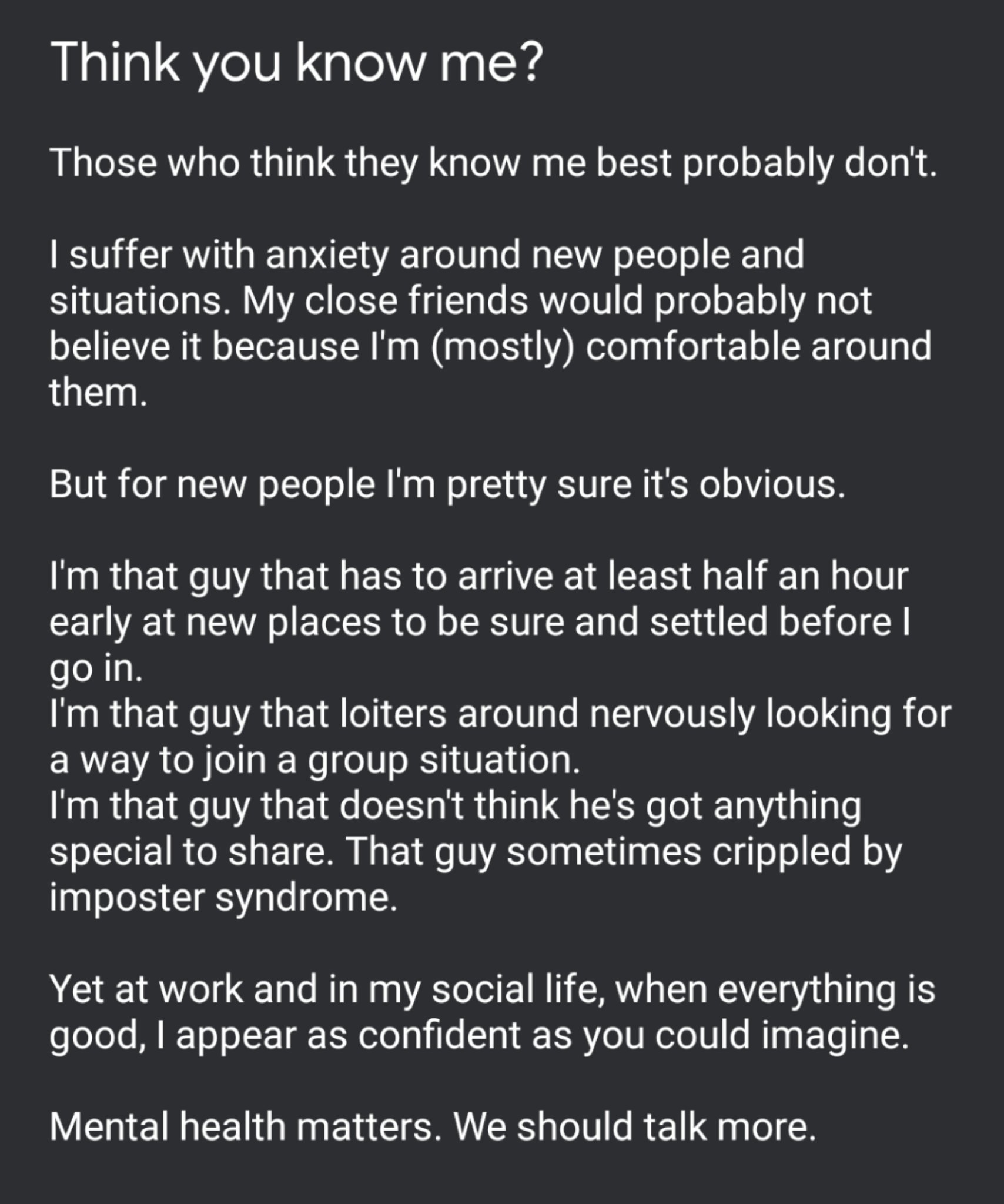
Image
tweeted Nov 11 @Rangathetrainer


Several days ago, possibly after following #SWE19 and the fun, games, innovations and emotions being shared by those taking part, I felt compelled to share the tweet on the right here.

I'm not normally one to share, I'm quite a closed book and have long upheld the typically british stiff upper lip approach to life: no matter how bad things are, turn up and soldier on with a smile. How often has that smile been painted on? I daren't even imagine!

It felt like a great relief to open up about my anxiety and I was touched by some very honest and appreciated conversations both in person and online with people I respect highly. 

I am that guy that get anxious about new situations. 
I take a while to warm up in new company.
I hover around nervously looking for a way in.
I am the guy that is constantly looking for reassurance. I want to feel like I belong.


It was this tweet from Miss C (@Tech_missc) that finally prompted me to open up: I need this space


As I wrote in my tweet, those closest to me probably don't see this side of me because with them, I am more at ease and usually sarcastic, quick-witted and sharp. But this is only because I feel I belong.

Throughout my professional life I have always strived to help others. I've never felt like I am brilliant or amazing, I just do what I think needs doing to the best of my ability. I find taking compliments very uncomfortable and tend to crack a joke to laugh it off or diminish my involvement to deflect the attention. 

It has only been in the last 2 years that I have begun to understand this. I made a bold decision 3 years ago and made a big career change. It was something I'd always felt I wanted to do. I was SO wrong! I quickly learnt that it wasn't what I wanted at all and I found my way back to a more suitable role as quickly as I could, as much for the benefit of others and for my own sanity and health. I was in the wrong position for me. It wasn't right or fair on me or others.

Walking away felt like a failure and it still haunts me from time to time, even though I try to remind myself that it was an equally bold decision to do so. I took a risk, it didn't work so I made changes and as a result, I've learnt a lot.

_________________________________________________________________________________

Part of my 'recovery' from this failure was down to a guy who I owe a huge amount. His name? Dean Stokes. (@deanstokes). 
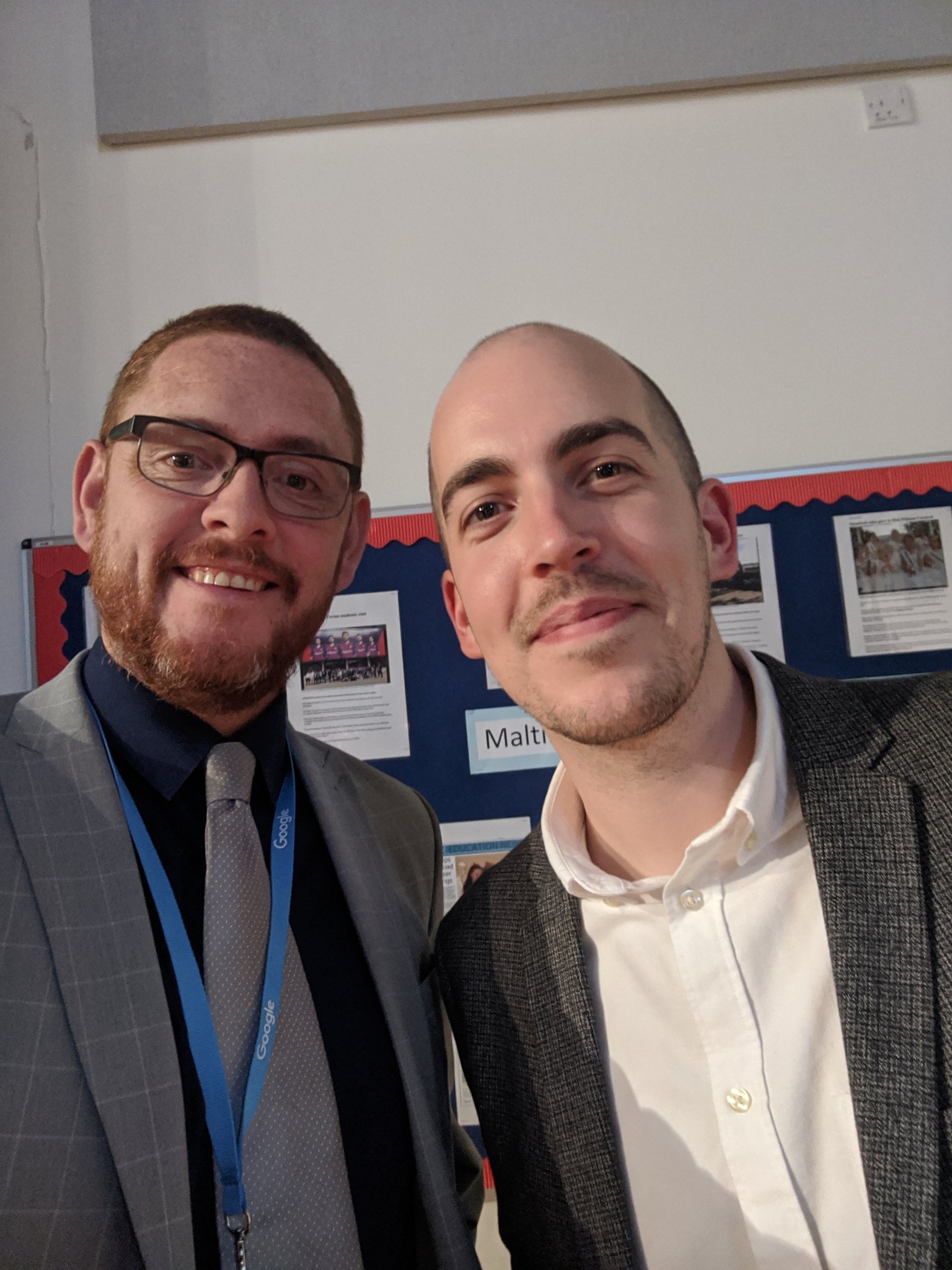
ImageI've known Dean for 20 years now, ever since he was a pupil in my very first Year 7 class in my NQT year. By his own admission, Dean was a shy young man in those days and somehow, he ended up growing in confidence and starring in school productions. He later returned to the school as a member of staff, a bit of a gamble of his own, and was instrumental in introducing G Suite to our school.

I had the honour of sharing an office with Dean for some time and learnt a huge amount about not just G Suite, but also, how to diversify and put yourself out there. When Dean moved on from school to full-time work, first with Appsevents, guess who took up the G Suite mantle.

I didn't feel ready. I didn't feel I had the knowledge base that Dean had. I felt I was dabbling and would quickly be found out. The one thing I was sure of though, I couldn't break it!

So fast forward to September 2018 and I got a call from Dean asking me to deliver a G Suite Support Staff Bootcamp for Appsevents in Aberdeen. I was hugely flattered but at the same time wondering, how desperate are you, Dean? You're asking me! 

I felt out of my depth and worried/anxious that I wouldn't be up to it. Getting a plane to Scotland was my first ever internal flight. I didn't even know what I needed but knowing Dean would be there to meet me at the airport got me through. At the hotel we met up with Ben Rouse (@Mr_BRouse) and talked about the plans for the next day. Then it was early to bed ahead of a busy day. I didn't really sleep. I kept tweaking my slides and pacing. Restless legs kept me awake.

The next morning we found our way to the venue and I had a great time with the staff there, who were welcoming and very receptive. I really enjoyed it but I still had doubts: Was it ok? Did they get what they needed from it? Did I miss anything? All these questions flying around my head.

Not long after Ben asked me to lead a similar bootcamp in Vienna. That was huge for me. And, as you might predict, I got to the school early, too early, no-one was there so I walked around Vienna for over an hour making sure I didn't stray too far and would be there on the dot to meet my contact. This was another great day and finished off with one of the delegates Jeremy, taking me to the Christmas Markets for some Gluhwein. A lovely way to end the day.

But all through this and still to this day, I don't feel like an expert, even though colleagues try to tell me I am. I just don't see what I do as anything special, because it's just what I've learnt to do.

So how does this all link?

Last night our school held our annual Key Stage 4 Awards Evening and I had invited Dean to be our guest speaker. We had several long chats beforehand and I was amazed to find he often feels like I do.
We talked about the message he could share and how that would be relevant to the students. He couldn't see it. That got us talking about Imposter Syndrome (which ended up a key part of Dean's message on the night). 

Needless to say, Dean smashed his speech. Everyone loved it. My technical side went well and the evening was a great success. A superb final school memory for our students and a great message for the future.


  • You’re more likely to regret the things you didn’t do rather than the things you did.
  • Take risks, make mistakes and learn from everything you do.
and remember
  • If you're feeling like a fraud, that's probably because you are really challenging yourself.
So to everyone reading this, thank you. Thank you for reading, thank you for reaching out, thank you for sharing - not just with me but with fellow professionals, friends and family.

And above all, thanks to you Dean. I would not be doing what I do now if it weren't for that quiet, shy guy who sat in French and allowed me to call him "Wally". 

The best kind of friendship is one where both of you grow as a result of the other.

Tuesday, 29 October 2019

You only get one shot (Sorry!)

I recently tweeted about my driving test...


It's something that I strongly believe in and always bothers me that the education system doesn't share the same approach.

If we are truly to motivate people to want to learn, they must see that a perceived failure at the first step is not in fact a failure at all. We've all said it to our classes and even our own children.. "We learn from our mistakes", "Every failure is one step closer to the solution", you know the drill. Yet the education system and its qualifications doesn't reflect this at all. Is it any wonder our young people get mixed messages and their self-esteem is adversely affected?

Returning to my first point, I failed my first driving test so chose to retake at a different location. One that in fact I was less familiar with, the intention being I might be more inclined to make my own decision based on the road situation than doing what perhaps I'd seen others do at that familiar junction where it went wrong the first time. The result was favourable and who knows whether that was down to my decision or just more driving experience by the time the second test came around.
Regardless, 26 years later I regard myself as a competent driver. I even helped my father pass his ADI course when he retrained to become an instructor by developing with him a step by step approach to parallel parking that he could then pass on to his students. Dad was a very successful driving instructor for many years, specialising in teaching those with disabilities. He was never concerned with a first time test pass, he was always concerned with the final test pass. I know his students appreciated this.

So how is it that in our current education system, resits/retakes are frowned upon and in some cases, have been withdrawn? How is it healthy for our young people to be told "you've got one shot at this, don't waste it".  
I'd replace second with another, but you get the sentiment

Young people are on their own in that exam room. No-one to offer them reassurance, no-one to bounce ideas off of, no-one to share the burden of what might be a make or break 60 - 120 minutes that will shape their lives forever. Is it any wonder that they are feeling the strain?

In the real world, I suspect very few of us would turn up for a big presentation with the boss without having tweaked it multiple times and run it past others, colleagues, friends and family, for their input or feedback. Imagine if your entire teaching career was based on the outcomes of a 15 minute 'drop-in' to your lesson last thing on Friday in the height of summer when it's 28 degrees out, everyone is ratty and you can't open the windows. Imagine the pressure you'd feel (I know, many probably don't need to imagine as you've been there).

In this day and age of innovation, collaboration and 10X thinking, we must embrace failure as an important step to success. So what if you don't get immediate success. 

What if we treated a student's learning journey like an application? (we keep telling the to apply their learning). What if students had Alpha and Beta opportunities to test their knowledge for flaws before a full release?  

What if these Alpha and Betas actually held credit?  Students would have nothing to lose and everything to gain and wouldn't this be a fairer reflection of the world they are heading in to?

I'm sure this would help students and us to better manage their mental health. Much like the new Ofsted EIF doesn't increase workload *coughs* , our current system of the first result counting for schools only serves to heap more pressure on students, directly or indirectly.

We have to ask ourselves what we want from our young people and what we want for their future. What will be important to and for them in their futures? (Not what was important to us)

I'm just rambling really, as a parent of a Year 11 I'm seeing a very different side now and it bothers me as you can tell.

We need to encourage innovation, encourage risk taking and encourage and celebrate the failures just as much as the successes as they are all part of the same journey.


Thursday, 19 September 2019

Reward and Retention in Education - a view


As someone who has been in education now for over 20 years, I've had my fair share of performance reviews or appraisals both as an employee and as a manager. In the early years it's fair to say lip service was paid to this process and targets were at best 'wooly'. It was often a box ticking exercise that was really not valued at all by those on the ground.

In more recent years, I've seen the process tighten to specific target areas, a much higher demand for physical evidence and impact and even suggested or designated targets for individuals in some cases. 

Whilst I agree that individual performance targets should benefit the organisation as a whole and be linked in some part to the strategic vision of the organisation, I believe there also has to be an element of personal indulgence for this to be truly valued and for there to be staff buy-in.

For those of us in the classroom, we can always look to improve our practice but how are we rewarded for this? In many cases I suspect the 'reward' is still having a job and not being subject to a support/improvement plan. Is fear really a reward? Does this promote a positive approach to personal development? Does it encourage risk taking? I think not.

For new teachers, there's the incentive to move up the pay scale but before long there is little room to improve unless the Leadership spine is for you. I've been there, climbing the ladder rapidly at an early stage. It felt good, it felt like I was a valuable member of the team and making a difference. However, as accountability become more and more about outcomes and less about real people, the workload expected grew and grew. 

Having worked my way up through middle leadership to senior leadership, all the way to Head of School, I quickly realised that it's a very lonely place and not one I wanted to inhabit. It wasn't right for me for many reasons, both professionally and personally but walking away was the right option for me. 

I was fortunate to be able to secure a position with a TLR very quickly, focusing on areas that interest me. It was a welcome relief and although the drop in wages was notable, it was worth it for my own peace of mind, my family and my mental health. 

School Leadership - I'm glad I did it, I don't regret it but would I do it again?  No thank you. I'm not on the Leadership spine anymore and have no desire to be. I'm 43.

Through various experiences in recent years, both first and second hand, I have found my attitudes have changed. I still want my students and my school to produce the best outcomes possible, but due to my close working relationship with my support staff colleagues, I now see and appreciate a very different side and I hope it's made me a better colleague to work with. 

This brings me on to my support staff colleagues, for whom I have the highest regard.

These are our colleagues, who work tirelessly day to day to keep schools running smoothly. They answer the phone to angry parents, they deal with last minute or incomplete requests from teachers and in some cases there is very much an 'us and them' culture. It's a sad truth that some teachers don't value their support staff colleagues.  They take them for granted or play the "that's an admin job" card all too often. What many fail to appreciate is just how hard these people work and for how little reward.

When budgets are cut, support staff are often the first to go. When staff leave, either through redundancies or natural wastage, in truth the work doesn't go away, it just gets passed on to already stretched colleagues in the offices. Rarely is a fuss made because support staff, just like teachers, want the best for the school and the students however, for those at or near the top of their pay band, where is the incentive to improve, take on more work or take on more CPD?  The reward is certainly not financial. Not in a million years will educational budgets extend to annual or christmas bonuses for those who do a fantastic job.

What if it were different? 

Ok, so we can accept there is never going to be money for pay bonuses for staff in schools, but that doesn't mean people can't be rewarded.

We talk a lot in schools about rewards for students but how do we reward staff? Do we say thank you enough and is it sincere?  Do we take the time to really say how grateful we are to colleagues for going the extra mile, or do we just squeeze it into our busy schedules in such a way that it carries no real gravitas? Do we present rewards to our staff in the same way we do our students? Do we ask staff what rewards they would like?

These are all things we would do if addressing a student body/council as part of a review of a student reward system so why don't we do it for staff? 

Picture the scene: 

Gary, a senior leader,  line manages Jenny, an office manager. Gary receives a message (face to face or via email) from a member of staff to say that Jenny has been a great help to them and gone far beyond what is expected of her just to make something happen effectively and efficiently by a deadline.  The member of staff has bought Jenny some chocolates as a thank you but wants her manager to be aware too.

Gary goes to see Jenny and invites her to the canteen where he gets them both a coffee and they sit down for a chat. Gary mentions during the chat that he has heard what a great job jenny did for her colleagues and thanks her personally, asking questions about what she actually did and why she did it.  Gary learns that Jenny has a keen interest in a coaching staff in terms of task prioritisation that she had not been able to explore before because she's always so busy. Gary thanks Jenny again and they both get a lot out of the short chat over coffee.

Gary speaks to his leadership colleagues about this later and Jenny is offered to opportunity to lead some staff training on prioritisation. In return for this additional work, that will undoubtedly benefit individual staff and the school overall, Jenny is given an additional day of in lieu for Christmas shopping on a day of her choice in December.  All she has to do is ensure the office is not left unmanned that day so she organises her team.

Jenny feels valued both professionally and personally. What was the cost to Gary? 1 cup of coffee, 15 minutes of time and 1 day of office time versus bespoke CPD sessions for those in need, improved efficiency and a positive relationship and ethos. Jenny benefits, her colleagues benefit, the school benefits and her family benefits. Other follow Gary's example and Jenny does the same with her team. It become infectious.

This may sound, to some, like an impossible dream or an oversimplification but it really shouldn't be. Budgets are tight, but add up the costs involved with staff absence due to illness against the cost of some coffees and days off in lieu and I bet there's a clear winner. 

We need to talk to each other about what we value and what drives us, because it certainly isn't the pursuit of that big Christmas bonus in the payslip. 

Good will goes a long way when budgets are tight. I'm a firm believer that people work for people, not organisations and if we treat people well, value them, listen to them and thank them sincerely we all benefit.


If you've read these ramblings, please, if you do nothing else, take time out to thank a colleague tomorrow for something they've done for you. A little goes a long way so find out what motivates them, what drives them and how they would like to be rewarded.

Whether it's a cake, a biscuit, a small bunch of flowers, a coffee or some time out to kick a ball about or just to sit in the sun for 5 minutes of calm - make it happen.

Taking time out of your day for a genuine gesture of thanks may just make them feel more valued, refreshed and it could be the difference between them having a great weekend or dreading coming back on Monday. You can guarantee it certainly won't be their performance targets motivating them.